
About
Reuben Whitten House
Location: The Reuben Whitten House is located directly behind the Whipple House Museum on 14 Pleasant Street in Ashland village.
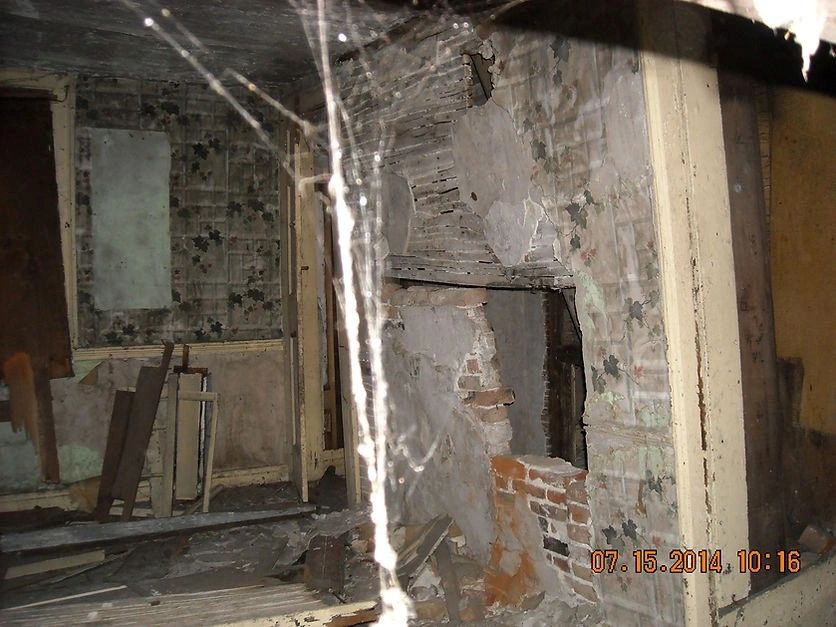
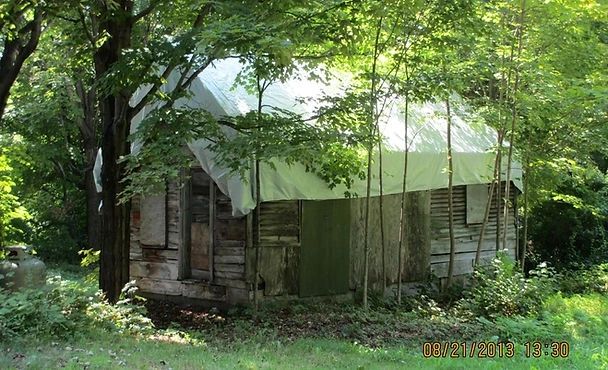
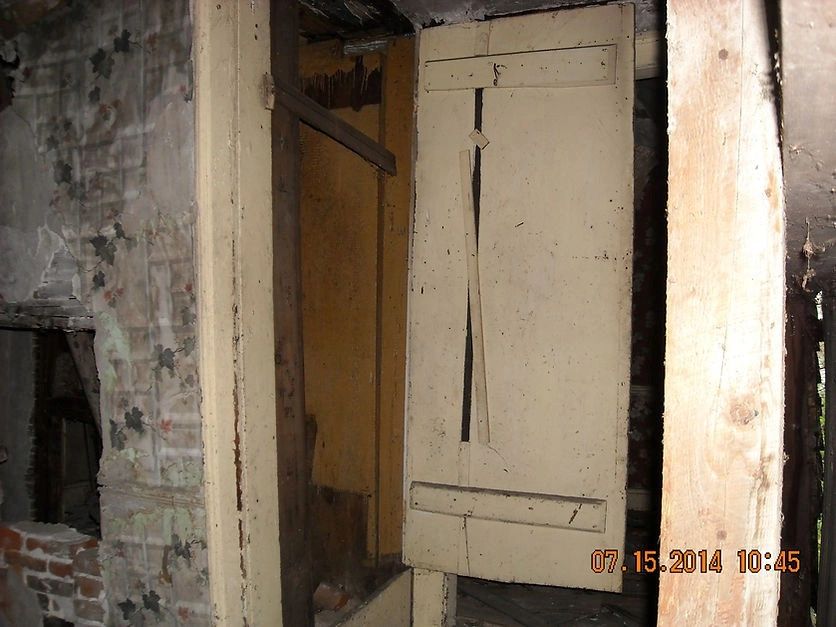
Hours: While the exterior of the Whitten House has undergone a much needed restoration in 201, further work is needed to restore the building's interior. Unfortunately, during this period of restoration, the House will be inaccessible to the public.
This small house was the home of Reuben (1771-1847) and Sally (1775-1859) Whitten. It originally stood on the Highland Street farm purchased by Reuben in 1797, and was probably built in the first years of the 19th century, perhaps as a workshop and storage building that was later converted into a house.
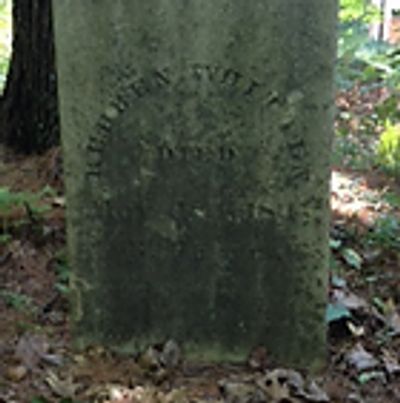
In 1816, “the year without a summer”, when crops failed throughout the area, because of periodic frosts throughout the growing season caused by the eruption of an Indonesian volcano, Whitten was able to raise 40 bushels of wheat on the higher south facing slopes of his farm. Although he could have sold the wheat at a high price, Whitten shared it with his neighbors at no charge, helping them through a difficult time. It is for this act of generosity that he is remembered today. In 1911, his grandson carved a monument for the family cemetery on the old farm that recalls this story of 1816 and is one of few physical reminders of the famous cold year.
The farm was sold after Reuben Whitten's death. A new farmhouse was built, and the small house was used for farm workers or rented to tenants. In the 1870s, it was moved downhill into the village to a site on Main Street to serve as workers housing for the expanding mills.
In 1969, the land was sold to the Town for a parking lot, but the house owners, Ruth and Arthur Knapp, reserved the building and gave it to the newly formed Ashland Historical Society. In 1974, the Society moved the house to the Whipple House property, where it was placed on a granite foundation and repairs were made.
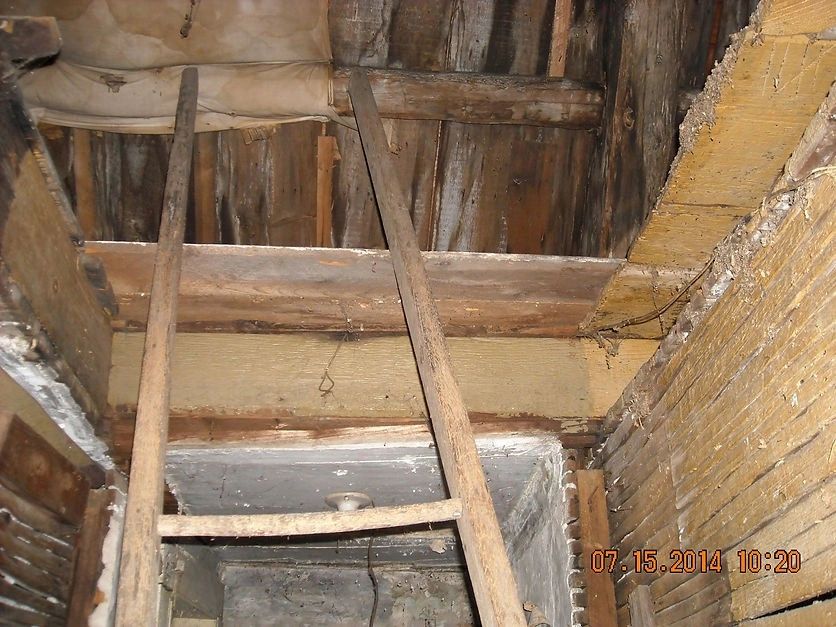
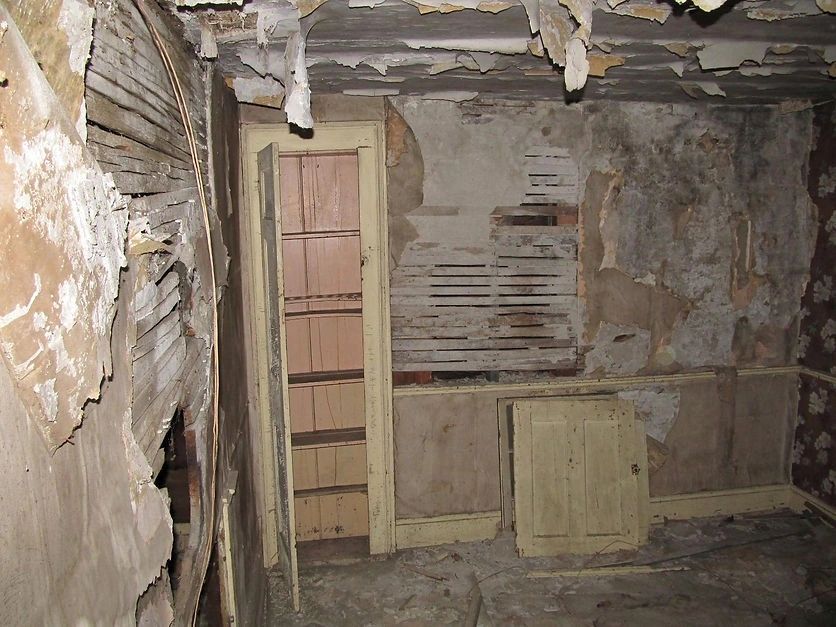
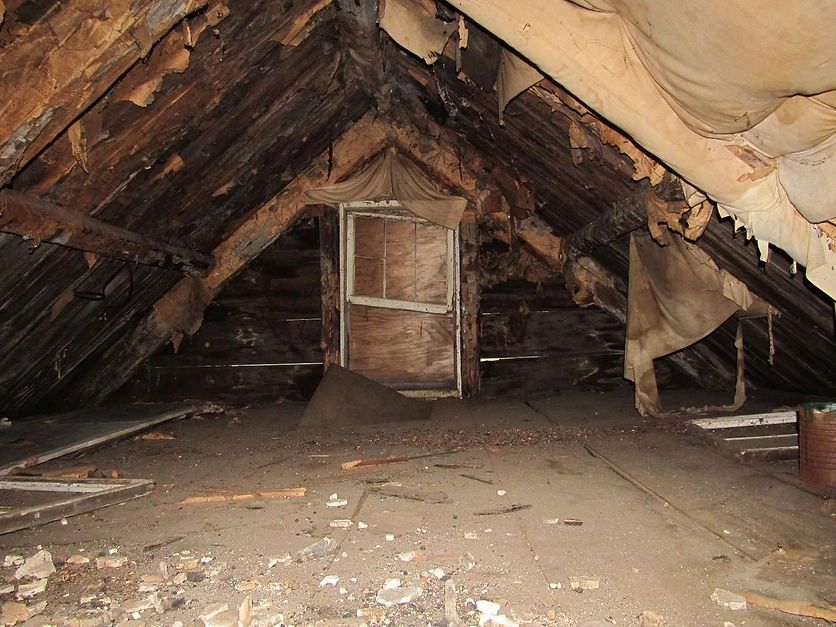
As the 200th anniversary of the cold year of 1816 approached, a fund raising campaign was begun to restore the building. In 2015-2016, the exterior was renovated, work that earned the Society a Preservation Achievement Award from the NH Preservation Alliance. The interior, basically two rooms and an unfinished attic, still remains to be restored. So, the house is not yet open to the public. Anyone interested in helping with the further restoration of this historic house, may send their donation to the Ashland Historical Society Whitten Fund at PO Box 175, Ashland NH 03217.
Support Our Mission
Your support is essential to our mission of preserving and sharing the history of Ashland Historical Society. By making a donation today, you can help us continue to collect, document, and exhibit artifacts and information that showcase the lives and stories of the people who have lived here over the centuries.
Ashland Historical Society
PO Box 175
Ashland, NH 03217
Uncover Ashland Historical Society's Fascinating Past
Reuben Whitten
Born in Massachusetts in 1771, Reuben was the son of a Revolutionary soldier, John Whitten, who died soon after the Revolutionary War. Reuben worked in Newburyport, MA, saving all of his money to buy a farm. He later came to Plymouth, NH and while out hunting wandered to Indian Hill in New Holderness, later known as Christian Hill and now Highland St, Ashland. Here he purchased 73 acres of land and built his small house around 1795. Reuben was then about 24 years old. He married Sally Sawyer, daughter of Humphrey Sawyer. Her mother was the daughter of William Piper, the first settler of Holderness.
In 1816, he managed to raise wheat that he shared with his neighbors to get through the winter. Reuben died in 1847, and his gravestone was paid for by the children of his grateful neighbors. In 1911, his grandson erected a memorial stone commemorating his heroics which resides in the family graveyard on Highland Street.
Uncover Ashland Historical Society's Fascinating Past
Ancestry
Reuben & Sally Whitten had 8 children between 1800 and 1817. In 1816, the year without a summer, they had 7 children between the ages of 10 and 16 and yet, the Whittens decided to share their rare bounty with their neighbors.
Three of Whitten's sons predeceased Reuben Whitten who predeceased his wife; all 6 of their sons predeceased Sally Whitten, all of them between 33 and 55 years of age. Reuben Whitten died at 76, Sally at 84. Their two daughters died after both of their parents.
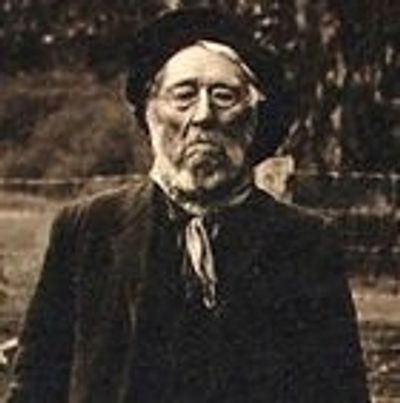
All of the Whitten's children made their lives in Ashland NH except their second daughter, Clarissa who lived in Boston MA. Alfred Roberts, grandson to the Whittens and oldest son of Mary Mooney (Whitten) Roberts carved the memorial stone and is pictured above. Geneology Researcher Kathleen DeWolfe has identified 21 Whitten grandchildren, though it appears that few remained in the area. Research continues.
Reuben Whitten 1771-1847 Holderness NH
Sally Whitten 1775-1859 Holderness NH
Mary Mooney Roberts 1800-1866 Holderness NH
Clarissa R Frost 1802-1869 Boston MA
Joseph Whitten 1802-1858 Holderness NH
Ezra S Whitten 1805-1859 Holderness NH
Ebenezer Whitten 1806-1839 Holderness NH
Daniel Baker Whitten 1810-1853 Holderness NH
Simeon D Whitten 1811-1843 New York NH
John Colby Whitten 1817-1874 Holderness NH
Discover Ashland Historical Society's Rich History
1816 Year Without Summer
On April 10, 1815, the sun set on the world that people knew when on a small Indonesian island Mount Tambora exploded to life. The largest volcanic eruption in recorded history spewed its first of several plumes of ash eighteen miles into the atmosphere which eventually blanketed the world with 150 million tons of dust which impacted the weather around the globe for over a year.
The unusual weather caused crop failures, floods, famine and disease. 1816 was known as “the starvation year” in Europe, “18-hundred-and-froze-to-death” in Canada and “the year without a summer” in northeastern US and all along the eastern seaboard as far as North Carolina.
Some at the time believed it was caused by sinners, some on the sunspot activity visible that year, while some even blamed it on Benjamin Franklin’s lightning rod experiments. However, climate data obtained from trees, ice cores, marine sediment and historical documents indicate 1816 was part of a mini ice age that lasted from 1400 to around 1860. During this time lower solar output produced harsh winters, shorter growing seasons and drier climates.
In New England, farmers dealt with killing frosts and snowfall throughout the summer months decimating the staple crops of vegetables, corn, wheat and hay. Scarce feed crops also led to the loss of livestock.
In what is now the Town of Ashland, New Hampshire, farmer Reuben Whitten used the southern slopes of Indian Hill to full advantage and succeeded when his neighbors had not—he managed a harvest of wheat. On an engraved stone that still stands today, his compassionate act of sharing that harvest with the community to get through the lean winter is immortalized.
The eruption of the Tambora volcano on the island of Soembawa in Indonesia on April 10th 1815 lasted one week and rumbled for 3 months. Close to 10,000 people on the island were killed and another 80,000 people would eventually die from starvation and diseases related to the eruption's effect on the climate. Summer weather in Northeastern North America included snowstorms and killing frosts from June into September, severely impacting staple crops. The dismal, cold summer in Europe inspired Mary Wollenstonecraft Shelley to write Frankenstein and the lack of horses in Germany led Baron Karl von Drais de Sauerbrun to invent a model of bicycle for transportation.
May 28 - Snow in Quebec and frost as far south as Pennsylvania.
June 6 - Heatwave in the 90s in the morning dropping to freezing in the afternoon. Nor’easter rain mixed with snow 6” to 12” of snowfall in New England
June 8-10 - Frost every morning in New England. Boston Independent Chronicle on June 17, 1816:
"On the night of 6th instant, after a cold day, Jack Frost paid another visit to this region of the country, and nipped the beans, cucumbers, and other tender plants. This surely is cold weather for summer. On the 5th we had quite warm weather, and in the afternoon copious showers attended with lightning and thunder -- then followed high cold winds from the northwest, and back again the above mentioned unwelcome visitor. On the 6th, 7th, and 8th June, fires were quite agreeable company in our habitations."
June 22 to 24 - Heat wave
July 4 - Ice was as thick as window glass throughout New England, NY and parts of PA. July cold front moved through New England early in the month killing corn, beans, cucumbers & squash but grains continued to survive
August - In Maine throughout month morning temperatures were in the low 30’s
Mid-August - Interior NY and all of NE experienced damaging frosts
August 20 - Strong cold front across northeast with thunderstorms; temperatures dropped 30 degrees.
August 21 - Frost reported as far south as MA; snow reported on Mount Moosilauke in NH; Corn destroyed from Albany to Boston.
August 28 - Cold front across northeast on August 28th with severe frost that ended growing season for most of northern New England.
John Hannigan, The Folklorist, has a wonderful 6-minute video that tells the story of "1816 The Year Without A Summer".




Join Us
Help Our Cause
Your support and contributions will enable us to meet our goals and fund our mission.
Ashland Historical Society
PO Box 175
Ashland, NH 03217